Me kaks ja konglomeraatti
Teosehdotus Nallikarin virkistysalueen julkiseksi teokseksi
Ehdotuksen työnimi: Me kaks ja konglomeraatti
Taiteilija: Ari Björn (Art & Procss)
Tilaaja: Suomen Kulttuurirahaston Pohjois-Pohjanmaan rahasto
Teosehdotus perustuu kahteen elementtiin Me kaksi sekä Konglomeraatti. Teosmateriaalit ovat pronssivalu ja kivi. Molemmissa elementeissä kivi on työstetty, jolloin ne eivät jää vain satunnaisiksi kiviksi. Kivien työstämisen kautta teokset integroituvat osaksi ympäristöä sen sijaan, että ne toimivat veistosjalustoina. Paikallinen kivi, jota ei ole erikseen tätä tarkoitusta varten tarvinnut louhia, valikoitui aiheen lähtökohdat huomioiden sekä ympäristökuormituksen että autenttisuuden näkökulmasta parhaaksi vaihtoehdoksi.
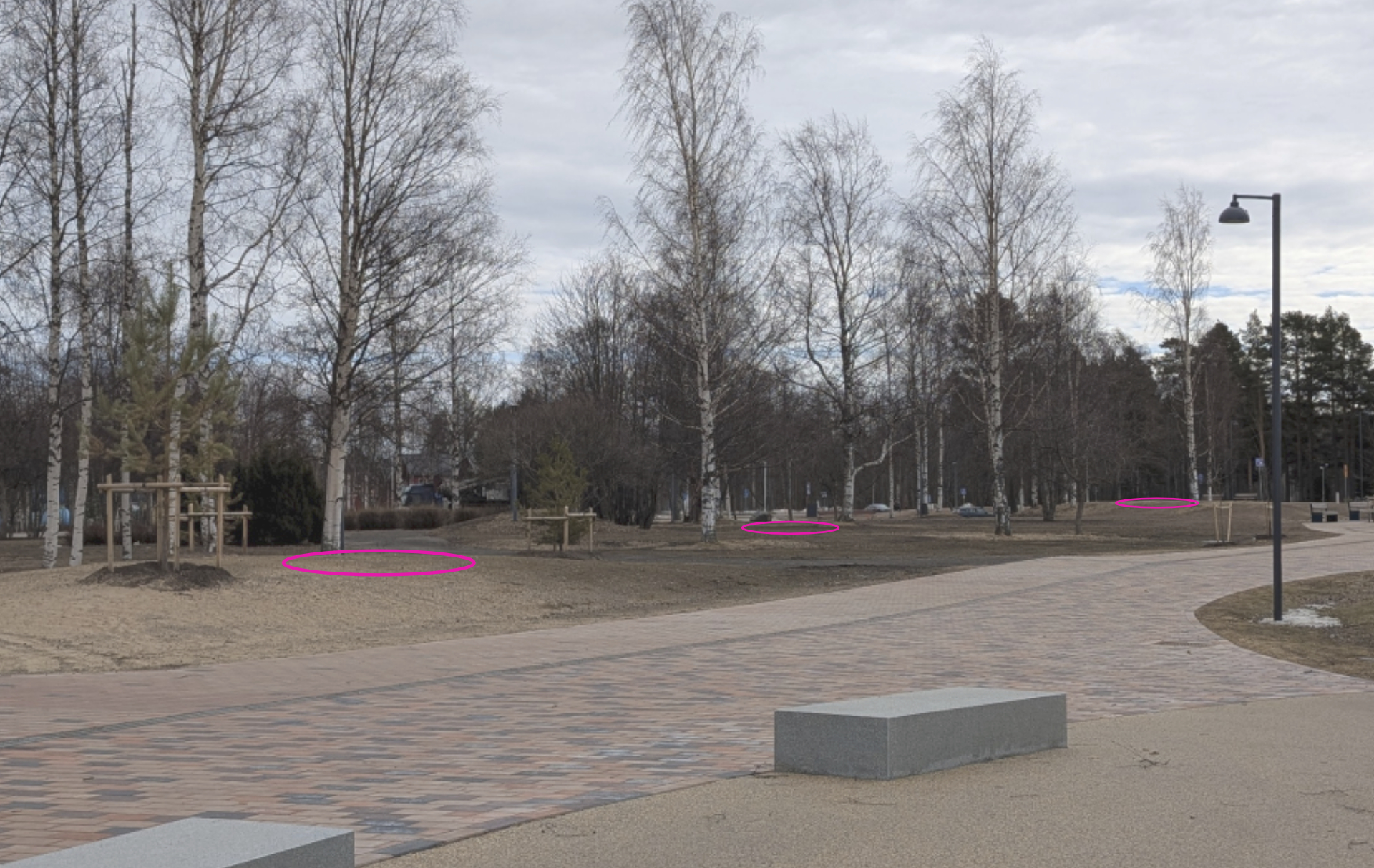
Teoskokonaisuus on sijoitettu Nallikarinaukion ja Aallokkoaukion väliselle puistoalueelle, josta sille on varattu kolme vaihtoehtoista paikkaa. Virkistysalueella on runsaasti erilaisia käytettäviä, toiminnallisia rakenteita, jotka aiheuttavat visuaalista hälyä, joten teoskokonaisuuden sijainti on valikoitunut hiukan sivummalle.
Konglomeraatti
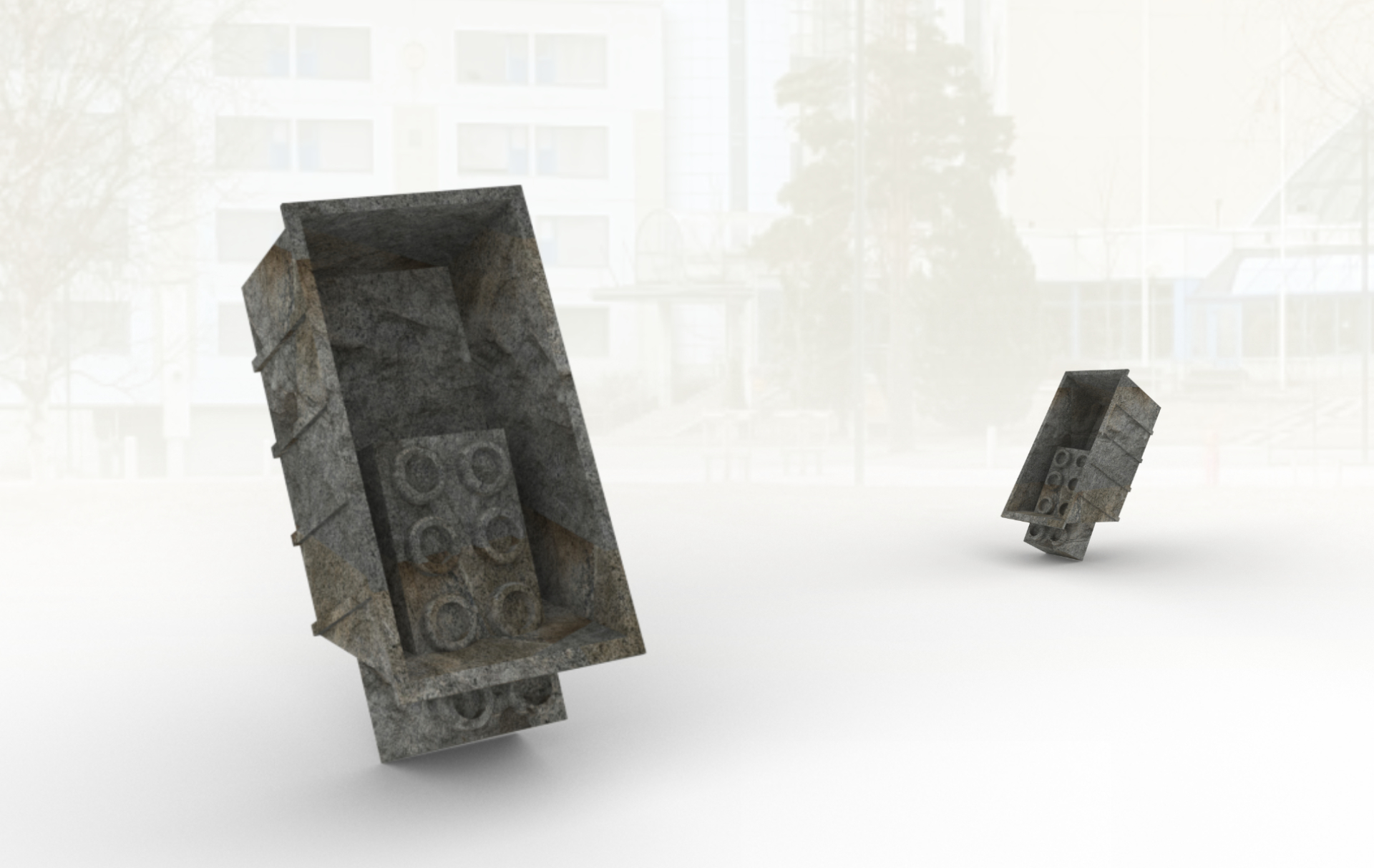
Maa-planeetta on alun perin ollut konglomeraatti, soramainen sedimenttikivi, jossa ovat yhdistyneet eri kivilajien pyöristyneet kappaleet. Ihmisen jälkeinen konglomeraatti on muoviesineistä ja hienorakeisesta sorasta koostuva, sedimenttiin sitoutunut kappale. Konglomeraatin muodostavilla kappaleilla on paikallinen sidos, ne ovat Hietasaaren alueelta löytyneitä kappaleita.
Me kaksi
Nallikarin alueen toiminnot ja rakenteet viittaavat pitkälti uimarantaan ja huvitteluun, vaikka virkistysalue on monipuolisempi kokonaisuus. Rantaviivaa pitkin kulkee luontopolku, jonka varrella ovat lintutorni ja luontolava. Esimerkiksi luontolavalta avautuu upea näkymä merelle. Alueen linnusto on runsas, rantaviivan tuulen tuivertama puusto ja laajemmin Hietasaaren luonto tarjoavat kurkistuksen pohjoisen rannikkoluontoon, johon ranta-alueella ei anneta juurikaan viitteitä.
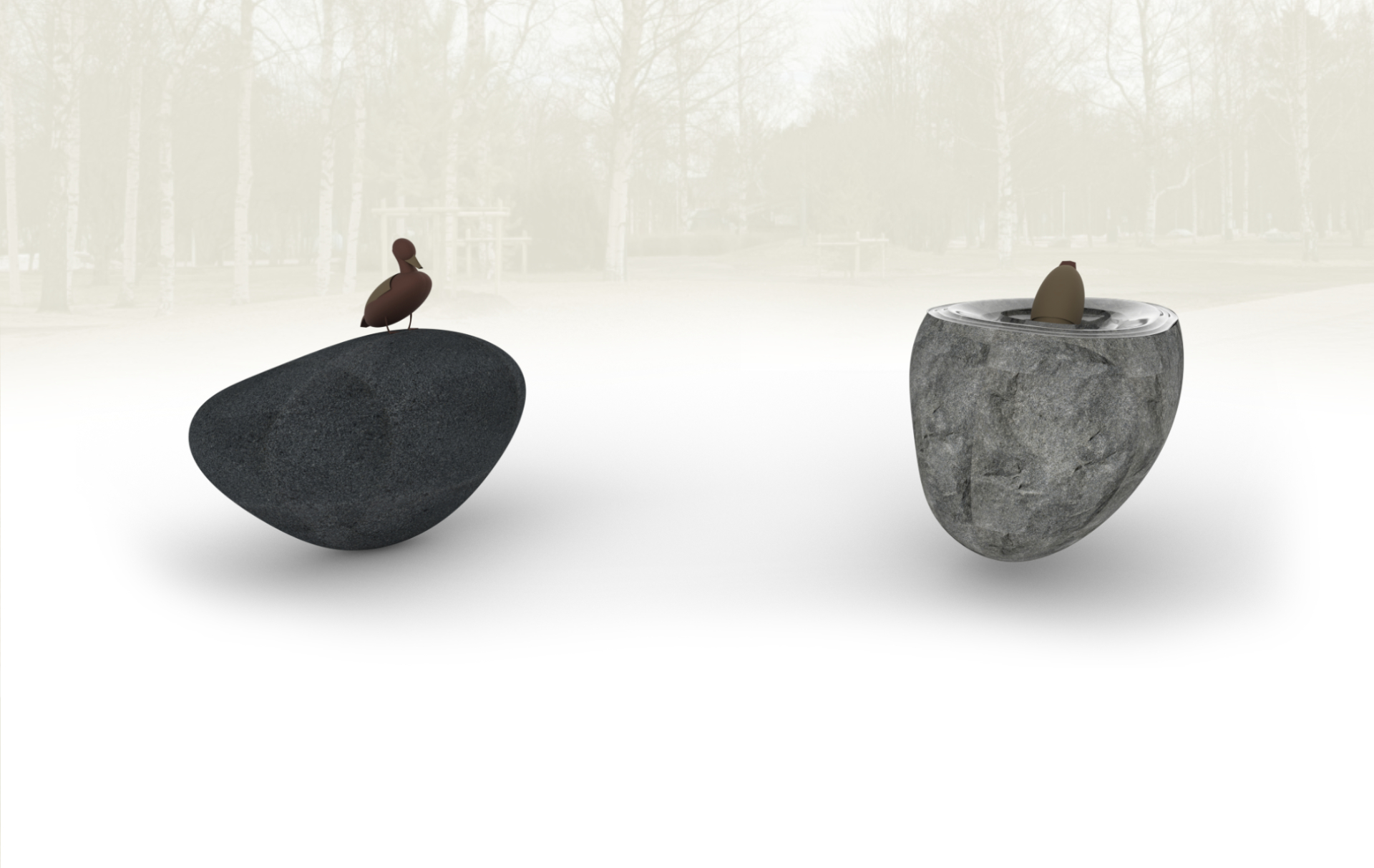
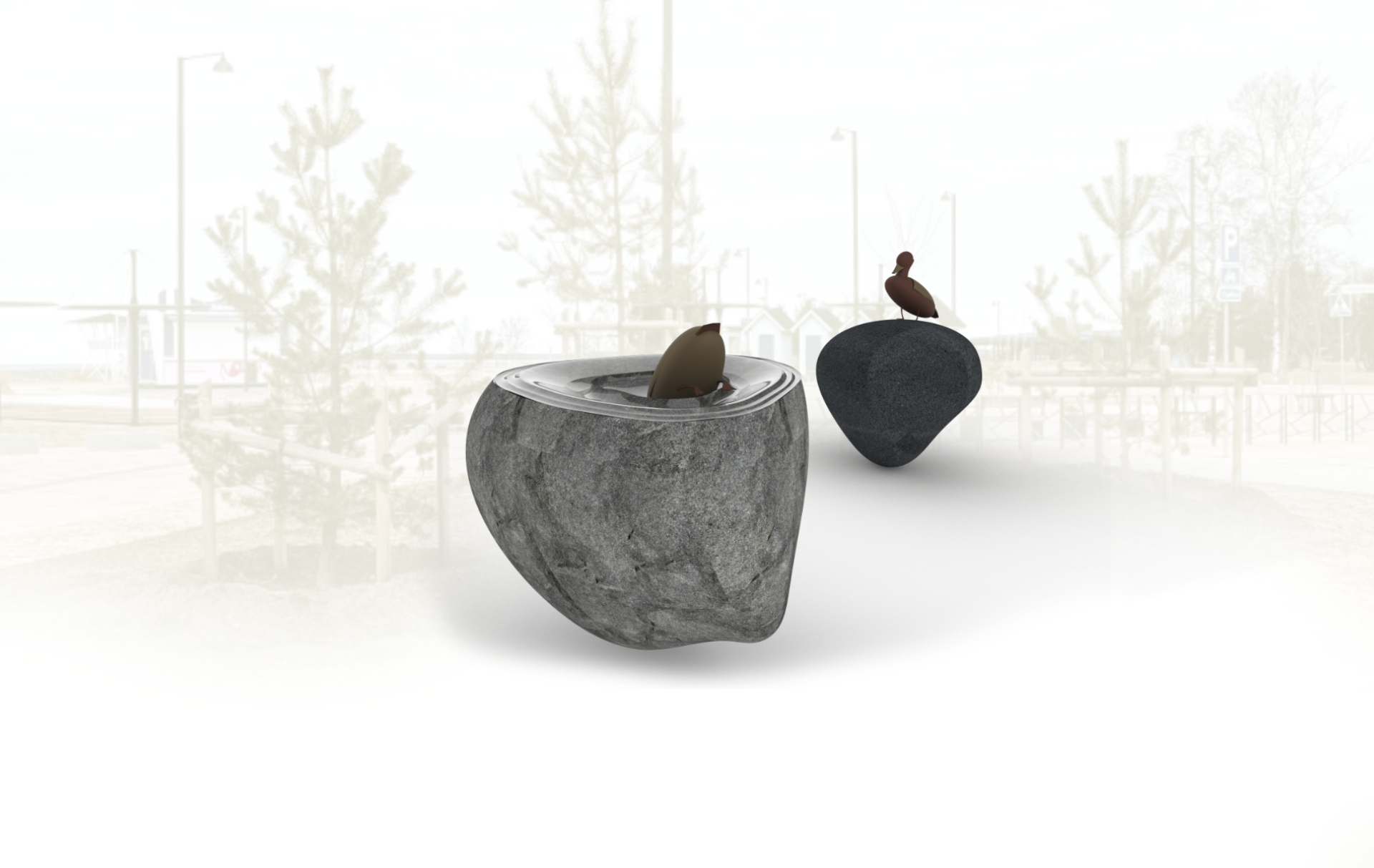
Samalla kun teos vesilintuineen antaa viitteen lähiluonnosta, se hiukan keskiöstä sivumpaan sijoitettuna kertoo toisten lajien läsnäolosta, kanssaeläjistä. Taidehistoriallisena viitekehyksenä toimivat von Wrighting veljesten (Wilhelm, Magnus ja Ferdinand) maalaukset.
Konglomeraatti H = 1200 mm
Me kaks
Sukeltava lintu H = 370 mm, kivi H = 1300 mm
Seisova lintu H = 553 mm, kivi H = 1200 mm
Eng.
Proposal for a public artwork in the Nallikari recreational area
Title of the proposal: The Two of Us and the Conglomerate
Artist: Ari Björn (Art & Procss)
Commissioned by: The Northern Ostrobothnia Fund of the Finnish Cultural Foundation
The proposed artwork is based on two elements: ‘Me kaksi’ and ‘Konglomeraatti’. The materials used are cast bronze and stone. In both elements, the stone has been worked, meaning they are not merely random stones. Through the working of the stone, the artworks become integrated into the environment rather than serving as pedestals for sculptures. Local stone, which did not need to be quarried specifically for this purpose, was selected as the best option, taking into account the starting points of the theme as well as considerations of environmental impact and authenticity.
The art installation is situated in the park area between Nallikarinaukio and Aallokkoaukio, where three alternative locations have been set aside for it. As the recreational area contains a wealth of different functional structures that create visual clutter, the installation has been positioned slightly to one side.
Conglomerate
The Earth was originally a conglomerate, a gravelly sedimentary rock composed of rounded fragments of various rock types bound together. An anthropogenic conglomerate is a body bound in sediment, consisting of plastic objects and fine-grained gravel. The fragments forming the conglomerate are locally bound; they are fragments found in the Hietasaari area.
The two of us
The activities and facilities in the Nallikari area are largely centred on the beach and leisure pursuits, although the recreational area is actually a more diverse complex. A nature trail runs along the shoreline, featuring a birdwatching tower and a nature viewing platform. For example, the nature viewing platform offers a magnificent view of the sea. The area is home to a rich variety of birdlife, and the wind-swept trees along the shoreline – as well as the wider natural environment of Hietasaari – offer a glimpse into the nature of the northern coast, to which the beach area itself gives little indication.
Whilst the work, with its waterfowl, alludes to the surrounding natural environment, its position slightly off-centre suggests the presence of other species – fellow inhabitants. The paintings by the von Wrighting brothers (Wilhelm, Magnus and Ferdinand) serve as an art-historical frame of reference.